ETH staking is the process of locking up Ethereum to participate in the Proof-of-Stake consensus mechanism, helping to validate transactions and secure the network in exchange for ETH rewards. Since the Ethereum Merge in September 2022, staking has replaced mining as the primary method of securing the Ethereum network. Stakers currently earn approximately 4-6% annual percentage yield (APY) on their staked ETH.
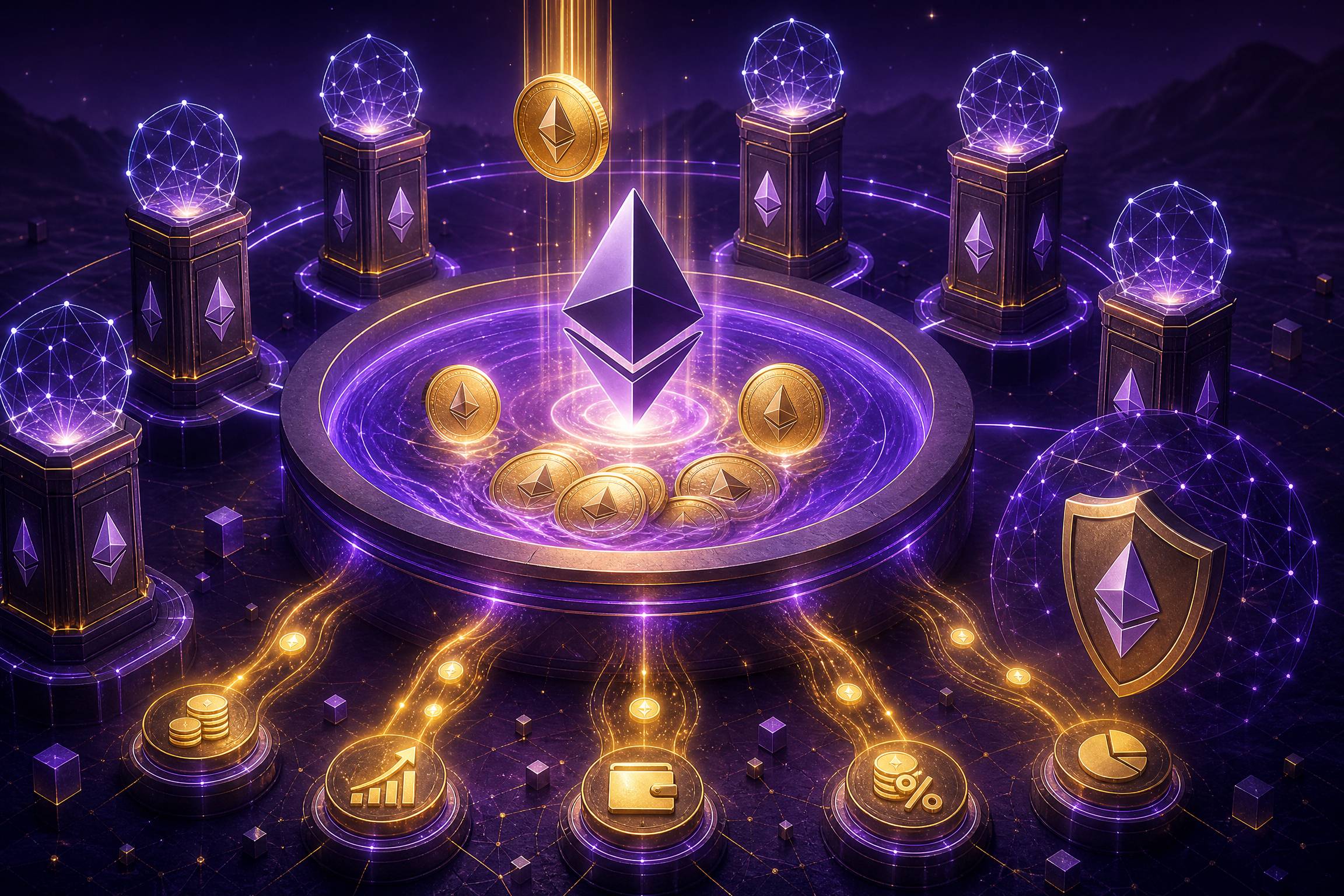
In Ethereum's Proof-of-Stake system, validators are chosen to propose and attest to new blocks based on the amount of ETH they have staked. Solo validators must deposit exactly 32 ETH into the official Ethereum deposit contract to activate a validator node. Validators earn rewards for correctly proposing and attesting to blocks, and face penalties (slashing) for malicious behavior or extended downtime. Rewards are paid in ETH and compound automatically.
For users who don't have 32 ETH or prefer liquidity, liquid staking protocols offer an accessible alternative. Lido Finance (stETH), Rocket Pool (rETH), and Coinbase (cbETH) allow you to stake any amount of ETH and receive a liquid derivative token in return. These tokens can be used in DeFi protocols, traded on exchanges, or held to accumulate staking rewards. Liquid staking currently accounts for over 30% of all staked ETH.
While ETH staking offers attractive yields, there are important risks to consider. Slashing risk: validators can lose a portion of their staked ETH for malicious behavior. Smart contract risk: liquid staking protocols involve smart contract code that could contain vulnerabilities. Market risk: the value of ETH can fluctuate significantly. Liquidity risk: solo staked ETH requires a waiting period to unstake. Always research thoroughly before staking and consider diversifying across multiple staking methods.
"Started staking ETH through Lido after reading this guide. Earning steady rewards every day!"
"The liquid staking comparison is excellent. Helped me understand the differences between Lido, Rocket Pool, and solo staking."
"Very thorough coverage of staking risks. Appreciated the balanced perspective on both rewards and potential downsides."